
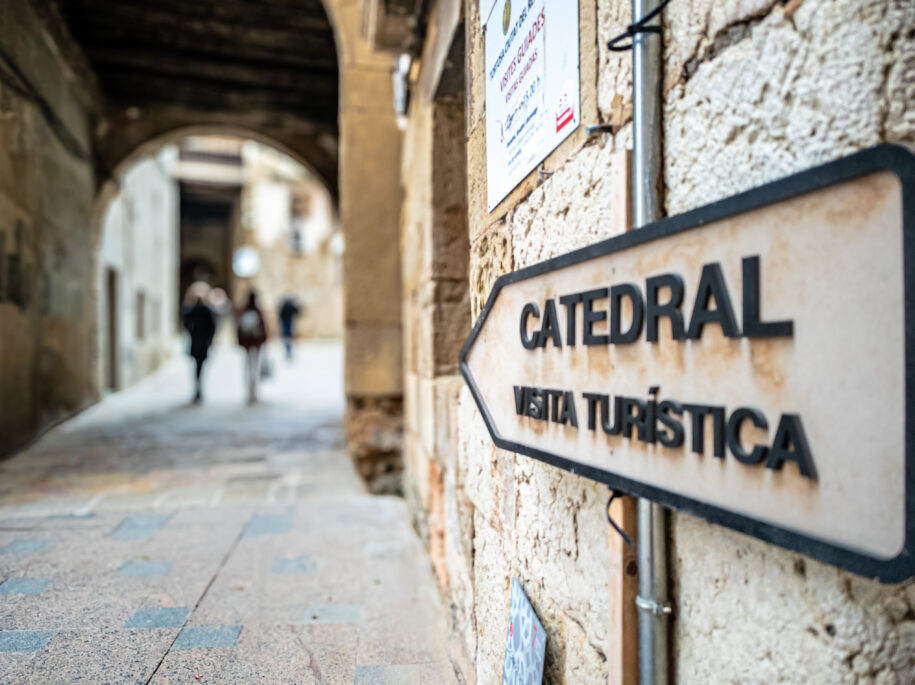
There is a side of Tortosa that you discover on foot—the one with the ancient stones of the cathedral, the one with the city walls that still stand guard over the Ebro River, the one with the palaces, the narrow streets, and the facades that tell of centuries of history.
And then there’s Tortosa de la Cinta.
That one’s different.
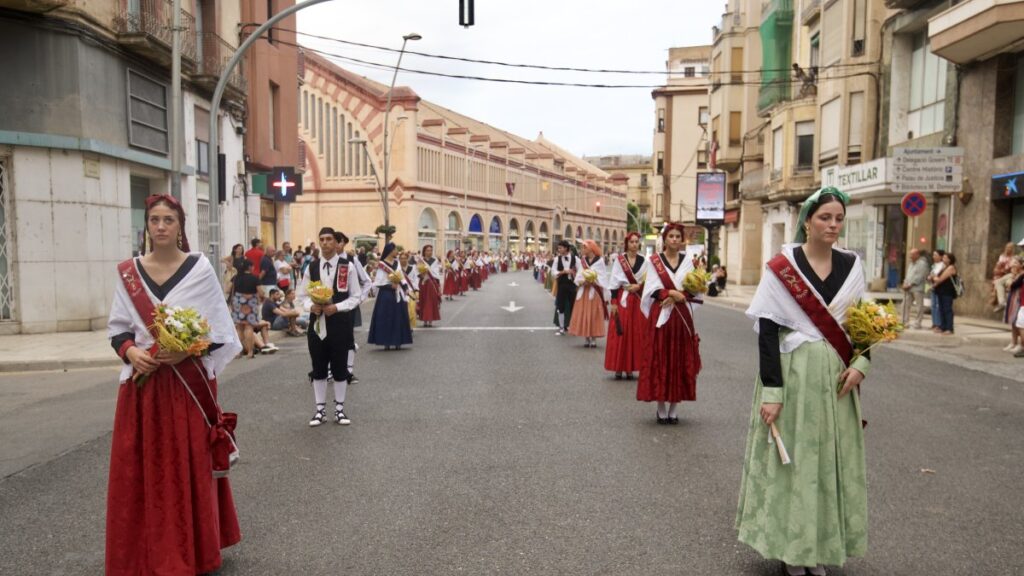
For a few days, the city seems to recognize itself. We go out into the streets, reconnect with one another, listen to music, watch the pubilles and hereus pass by, smell the panoli, follow the sound of the dolçaines, and gaze once more toward the Cathedral, just as so many generations of Tortosinos have done before us.
The 2026 Fiestas de la Cinta in Tortosa will be held from August 29 to September 7, continuing the ten-day format introduced last year. The festival will feature concerts, folk culture, social clubs, cuisine, religious events, and, above all, plenty of street life.
For those of us who love Tortosa and its history, there are few better times to explore it.
La Cinta isn’t just a festival—it’s part of Tortosa’s history
To understand what the Cinta means to Tortosa, we have to go back several centuries.
In the early 16th century, during the episcopate of Alfonso de Aragón, a festival dedicated to the Virgin of the Ribbon was already established. In 1863, the Virgin of La Cinta was proclaimed the patron saint of Tortosa alongside the Guardian Angel, and four years later, in 1867, the celebration was moved to the first Sunday in September, a date that has remained to this day.
These are historical facts, yes. But the Cinta makes much more sense when you see how the city experiences it.
You understand it when you see entire families waiting for the procession to pass by. You understand it when the cathedral fills up. When the pubilles and hereus appear. When the organizations prepare the offerings. When the streets become the stage for the correfoc, the Coso Iris, the dances, the peñas, or the traditional distribution of panoli. All of this is part of a festival in which the religious, the popular, and the festive have coexisted naturally for generations.
And that blend is, precisely, what makes the Cinta so special.
The Cathedral and the Mare de Déu de la Cinta: the heart of the festival
If there is one place that takes on special significance during these days, it is the Cathedral of Santa María in Tortosa.
We may walk past it many times. We may admire its facade, cross the square, or see it silhouetted against the old town. But during the patron saint festivities, it feels different.
Sunday, September 6, 2026—the feast day of the Mare de Déu de la Cinta—will be a day dedicated especially to the patron saint. The offering and the procession are central to the religious and traditional heart of the festivities, which continue to keep alive this centuries-old bond between Tortosa and La Cinta.
And that is precisely why we recommend taking your time when visiting the cathedral.
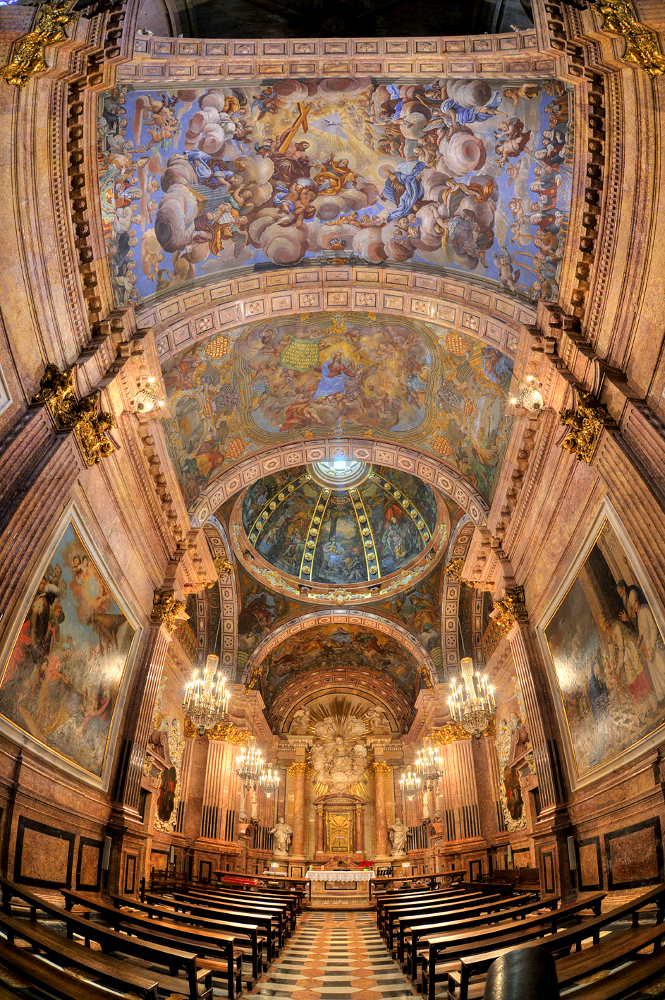
Our guided tour of the Cathedral of Santa María de Tortosa allows you to explore the cathedral accompanied by a guide and learn about its architecture, symbolism, permanent exhibition, and the sacred artworks it houses. This tour helps you understand why the cathedral has played such an important role in the spiritual and cultural life of Tortosa for centuries.
During the Fiestas de la Cinta, something special happens: what we explain during the tour ceases to be just history.
It’s happening right before our eyes.
The tradition lives on.
A celebration with a musical twist: the Cinta 2026 concerts
Tortosa has a long-standing connection to music, and the festivals would be unthinkable without it.
The music lineup presented for Cinta 2026 brings together local artists with established names and performances aimed at a wide variety of audiences. The City Council has announced a particularly extensive lineup for the ten-day celebration.
Among the main musical events are:
- August 29: La Cinta es Mou, featuring Dragon Rapide and Ben Endins, a Sopa de Cabra tribute band.
- August 31: Traditional concert by the Tortosa Municipal Band.
- September 1: Va Per Tu Vidal Festival, featuring Los Niños Jesús, a cover band led by Jordi Évole.
- September 2: Rafa Sánchez, the legendary voice of La Unión, as well as So Payaso, an Extremoduro tribute band, and the Tortosa Big Band.
- September 3: The Ludwig Band, Pepet i Marieta from Ebre on their farewell tour, and Montse Castellà from Tortosa.
- September 4: Renaldo & Clara, Triquell, and El+Pop, the new project by Tortosa-based musician Robert Pujol.
- September 5: Owner DRT, following the Peñas Reenactment.
- September 6: Al·lèrgiques al Pol·len and Sandra Monfort.
- September 7: Festive closing ceremony featuring Quico el Célio, el Noi, and el Mut from Ferreries.
In addition to all this, there will be other performances, DJ sets, and festive activities.
But there’s something we especially like about this year’s poster: Tortosa and the Terres de l’Ebre aren’t just the setting for the festival. They’re also part of its music.
Montse Castellà, Pepet and Marieta, Quico el Célio, el Noi and el Mut de Ferreries, Owner DRT, Robert Pujol… names linked to this region that remind us that our culture is not only being preserved—it continues to evolve.
Between one concert and the next, there are 2,000 years of Tortosa waiting
First-time visitors to the Fiestas de la Cinta may be captivated by the music, the atmosphere, and the crowded streets.
But you only have to look up a little to realize that the party is taking place against an extraordinary backdrop.
That’s something that we Tortosinos sometimes forget, precisely because it’s so close to us.
The Portal dels Romeu. The riverfront. The Oliver de Boteller Palace. The Episcopal Palace. The Royal Colleges. The Cathedral. The Casa Gregó. The streets of the old city. The Suda Castle, overlooking it all from above.
Every era has left something behind.
And when we stroll through Tortosa, we’re not just exploring a city— we’re walking through more than two thousand years of history.
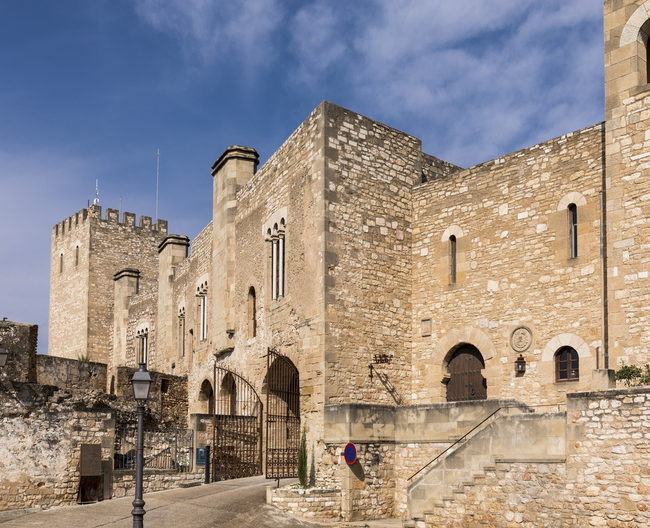
So, if you’re coming to Tortosa to enjoy the Cinta, we recommend setting aside some time for our General Tour of Tortosa.
This visit is what allows us to start putting the pieces together.
We’ll tour some of the most iconic sites in the historic center, such as the Portal dels Romeu, the riverfront façade, the Oliver de Boteller Palace, the Royal Colleges, the Olivera Gate, and the Casa Gregó, before concluding our tour with a visit to the Cathedral of Santa María.
And then something happens that we love to see in those traveling with us: streets they had walked down just a few minutes earlier without paying much attention to them begin to make sense.
Because learning about history changes the way we see things.
Tortosa from the Ebro: the perspective we should never forget
There is another side of Tortosa that is worth seeing during these days.
The one you can see from the river.
The Ebro is not simply the river that flows through Tortosa. It is impossible to separate the city’s history from this vast waterway, which for centuries brought people, goods, wealth, cultures, and ideas.
Tortosa grew up overlooking the Ebro.
That’s why viewing the city from the water allows you to understand it from a completely different perspective.
The experience of cruising down the Ebro with Lo Sirgador combines heritage and the river: first, you’ll discover some of Tortosa’s main historic sites, and then you’ll admire the city’s skyline from the Ebro, with its bridges and monumental buildings coming into view.
During *La Cinta*, it seems like a great plan to us.
In the morning, history. Then, the Ebro River. And as evening falls, head back downtown to soak up the festive atmosphere once again.
There are worse ways to spend a day in Tortosa.
Climb up to La Suda to understand why Tortosa was so important
There’s one thing we always recommend to anyone who wants to understand Tortosa: go up.
Head up toward the city walls. Toward La Suda. Toward those places where geography explains much of the history.
From above, one immediately grasps the strategic importance of Tortosa. The Ebro lies at our feet, the natural transportation routes are clear, the city stretches along the river, and the mountains frame the landscape.
Suddenly, a lot of things start to make sense.
INSERTED IMAGE — Panoramic view from La Suda Castle overlooking Tortosa and the Ebro River.
Recommended SEO title: “La Suda Castle and panoramic views of Tortosa and the Ebro River.”
The Route of Tortosa’s City Walls and Fortifications showcases part of the approximately six kilometers of defensive structures preserved in the city and takes visitors through sites such as the Castillo de la Suda and the Avanzadas de San Juan.
This is a different side of Tortosa from that of the cathedral and the Renaissance palaces.
More military. More strategic.
But it is essential to understanding why so many cultures sought to control this city and this crossing of the Ebro.
La Cinta Comes Alive on the Street
And after all that history, let’s get back to the party.
Because, above all, La Cinta is experienced on the street.
At the sports bars.
At the correfoc.
At the Coso Iris.
At dances and concerts.
At the Panoli.
In the pubilles and hereus.
At the offering.
In the procession.
And also in those moments that never make it onto any TV show: running into someone you haven’t seen in months, sitting down for a drink when the heat subsides, hearing music in the distance as you walk through the old town, or crossing the bridge and gazing at Tortosa all lit up on the other side of the Ebro.
Perhaps that is the real secret behind the Fiestas de la Cinta.
Everyone has their own.
Come to La Cinta. And take the opportunity to explore Tortosa.
If you visit the 2026 Fiestas de la Cinta in Tortosa this year, enjoy the concerts. Head out into the streets. Check out the offering and the procession. Soak up the atmosphere of the peñas. Try some panoli. Watch the giants. Listen to the dolçaines.
But be sure to set aside a few hours to explore the city beyond the festival.
At Visitur, we are passionate about sharing the story of Tortosa because we know that behind every stone there is a story, behind every building there are people, and behind many of our traditions there are centuries of history that continue to shape us today.
You can explore all our offerings on guided tours of Tortosa.
Come via La Cinta. Stay in Tortosa.
And when you return home, we hope you’ll see the city in a whole new light.